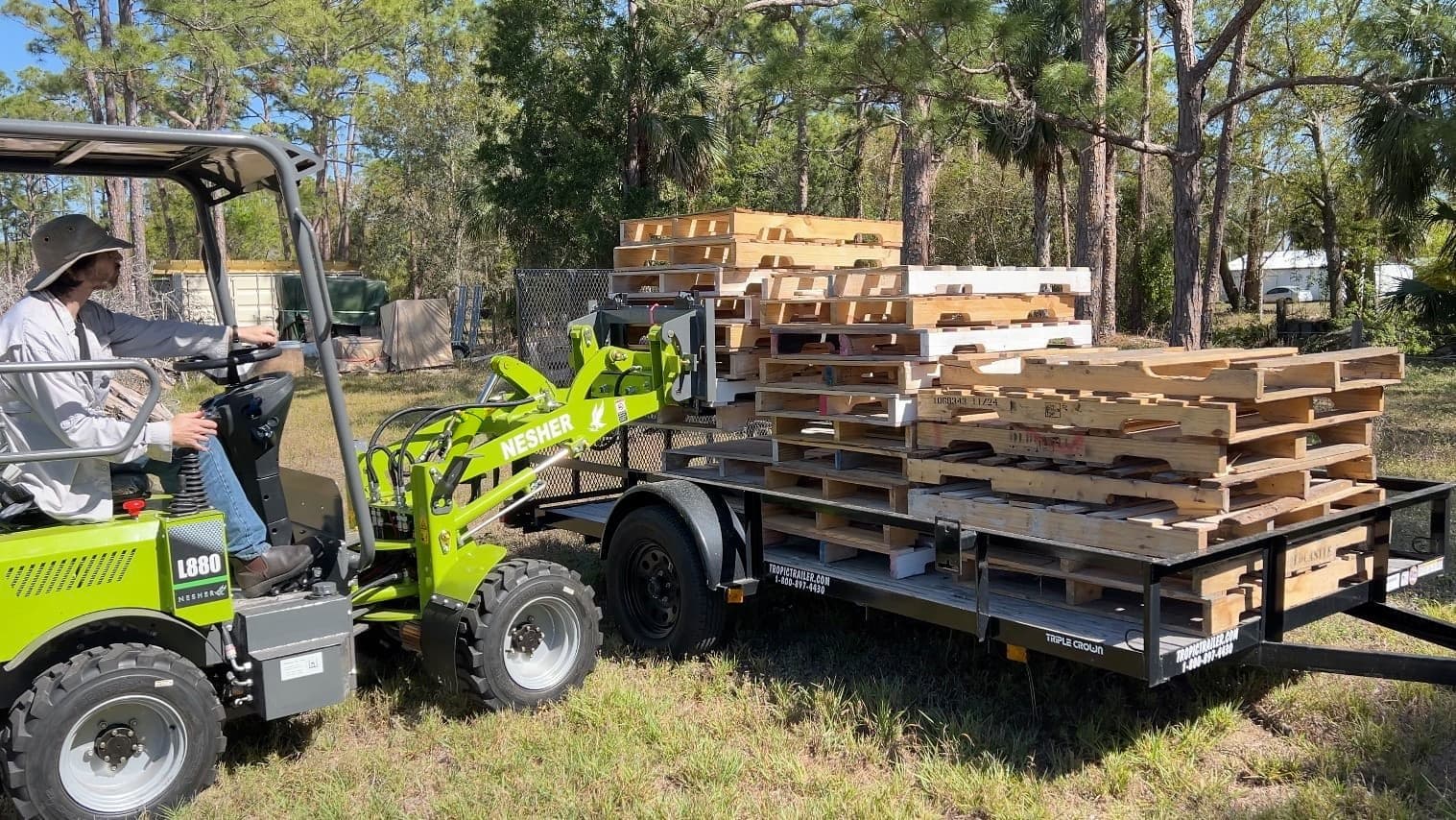
Two federal tax measures apply to buying an electric loader in 2026: a 100% first-year write-off open to any business, and a refundable credit of up to 30% for corporations only. As of October 2026 we have found no provincial purchase grant for off-road electric equipment. This guide is general information, not tax advice: confirm your own situation with your accountant.
100% first-year write-off (Class 56)
Zero-emission equipment that is not a road vehicle falls under Class 56 of the capital cost allowance. According to EY's summary of Bill C-15 (Royal Assent March 26, 2026), this class gets a 100% first-year deduction for equipment acquired since January 1, 2025 and in use before 2030.
This is open to any business, incorporated or not: sole proprietors, farms and corporations. Two caveats. The Canada Revenue Agency's website may still show the earlier schedule (55% for 2026–2027); mention Bill C-15 to your accountant. And Quebec's treatment may differ from the federal one.
Clean Technology Investment Tax Credit (up to 30%)
This is a refundable credit of up to 30% of the cost of new equipment, falling to 15% in 2034 (Canada Revenue Agency). Three conditions matter:
Only taxable Canadian corporations can claim it. Sole proprietors, unincorporated farms, private individuals and municipalities cannot.
The equipment must be new and used in Canada. A demo or used machine does not qualify.
A loader's eligibility is still to be confirmed. The law covers "non-road zero-emission vehicles", which an electric loader is expected to fit, but Natural Resources Canada's technical guide for that category is still in development.
For a corporation, 30% is worth up to $5,997 on an L880, $10,500 on an L1400 and $19,500 on an L2500. If you want the credit, buy the machine instead of leasing it: leased equipment qualifies only in limited cases.
The two do not stack on the full price
The credit reduces the cost the write-off is calculated on. A corporation that receives a 30% credit therefore deducts the remaining 70%, not 100%. We don't publish a "net cost": it depends on your tax rate, and your accountant can work it out in minutes.
| Buyer | 30% credit | First-year write-off |
|---|---|---|
| Taxable Canadian corporation | Yes, if the machine qualifies | 100% of the cost after the credit |
| Sole proprietor or unincorporated farm | No | 100% of the cost |
| Municipality or private individual | No | No |
Provincial programs: nothing confirmed yet
As of October 2026 we have found no Quebec or Ontario program that pays toward an off-road electric loader. Quebec's Écocamionnage program covers on-road vehicles, Ontario's farm energy-efficiency cost-share excludes vehicles and tractors, and the federal Agricultural Clean Technology adoption stream is closed. If a program opens, we will update this page.
Financing
Two public programs can help finance the purchase through your own lender. Non-farm small businesses can ask for a Canada Small Business Financing Program loan, which covers equipment. Farms can go to Farm Credit Canada.
Next steps
Browse our Nesher electric loaders, build yours, or ask for a quote to hand to your accountant.